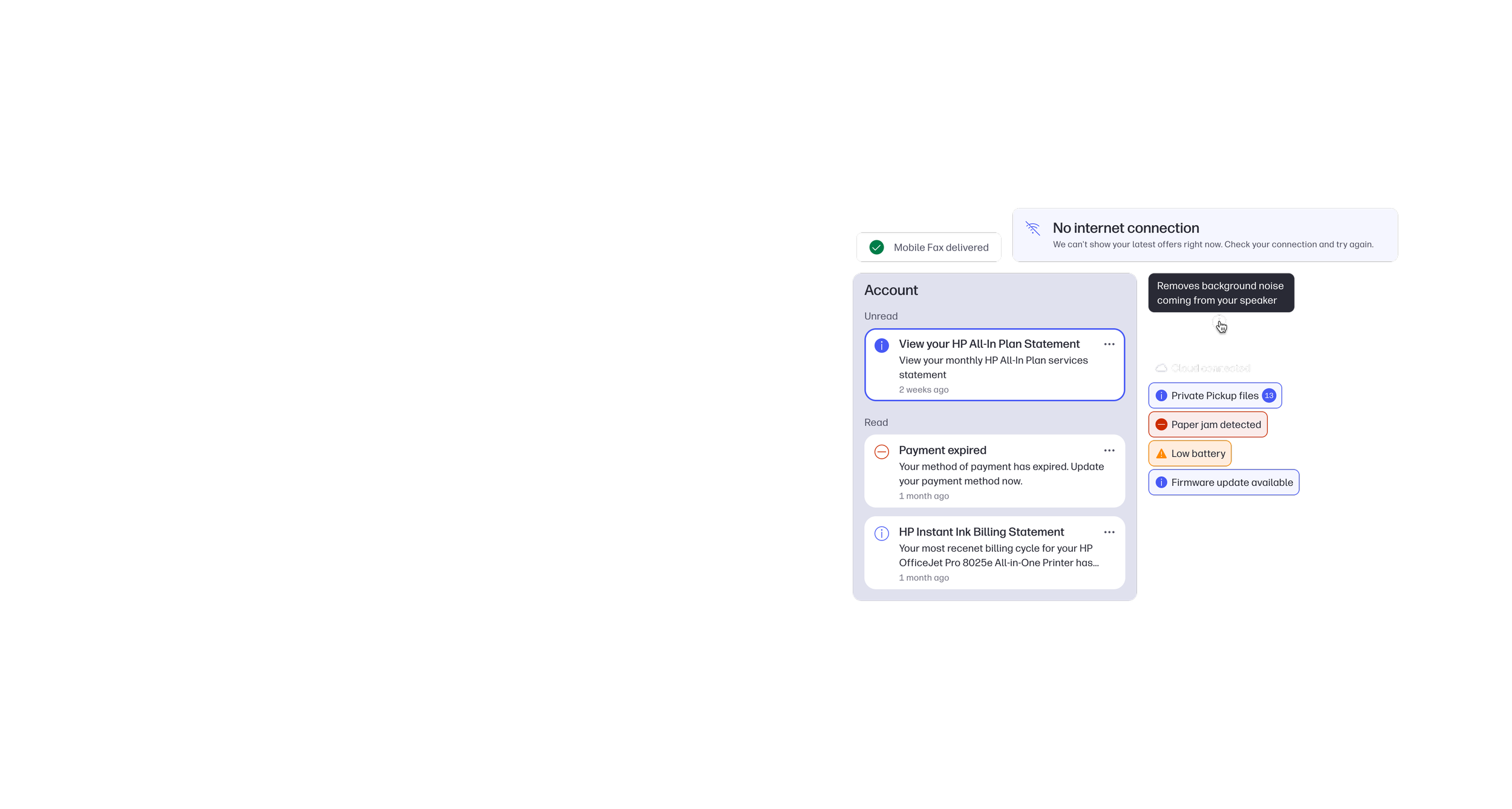
Establishing a Unified Communications Strategy
Role: Lead Product Designer
My Role
I was the lead product designer for the end-to-end communications strategy, partnering with product, engineering, and business stakeholders across four sectors to define principles, workflows, and system-level patterns. I led 10 workshops and several research efforts to allow us to land on our finalized strategy.
Before this work
In the absence of a shared communication strategy, messaging patterns varied widely across teams. Partner teams were often unsure where their content should live or which surfaces were appropriate, leading to fragmented and inconsistent decisions across the product.
Compounding this, all in-app messages were hard-coded into the app. Any request for a new message required engineering involvement and had to wait for the next app release to ship. This made even small changes slow and limited teams’ ability to iterate or respond to emerging needs.
For users, this resulted in an experience with inconsistent and conflicting messages, reducing clarity, predictability, and trust.
Defining the Communication System
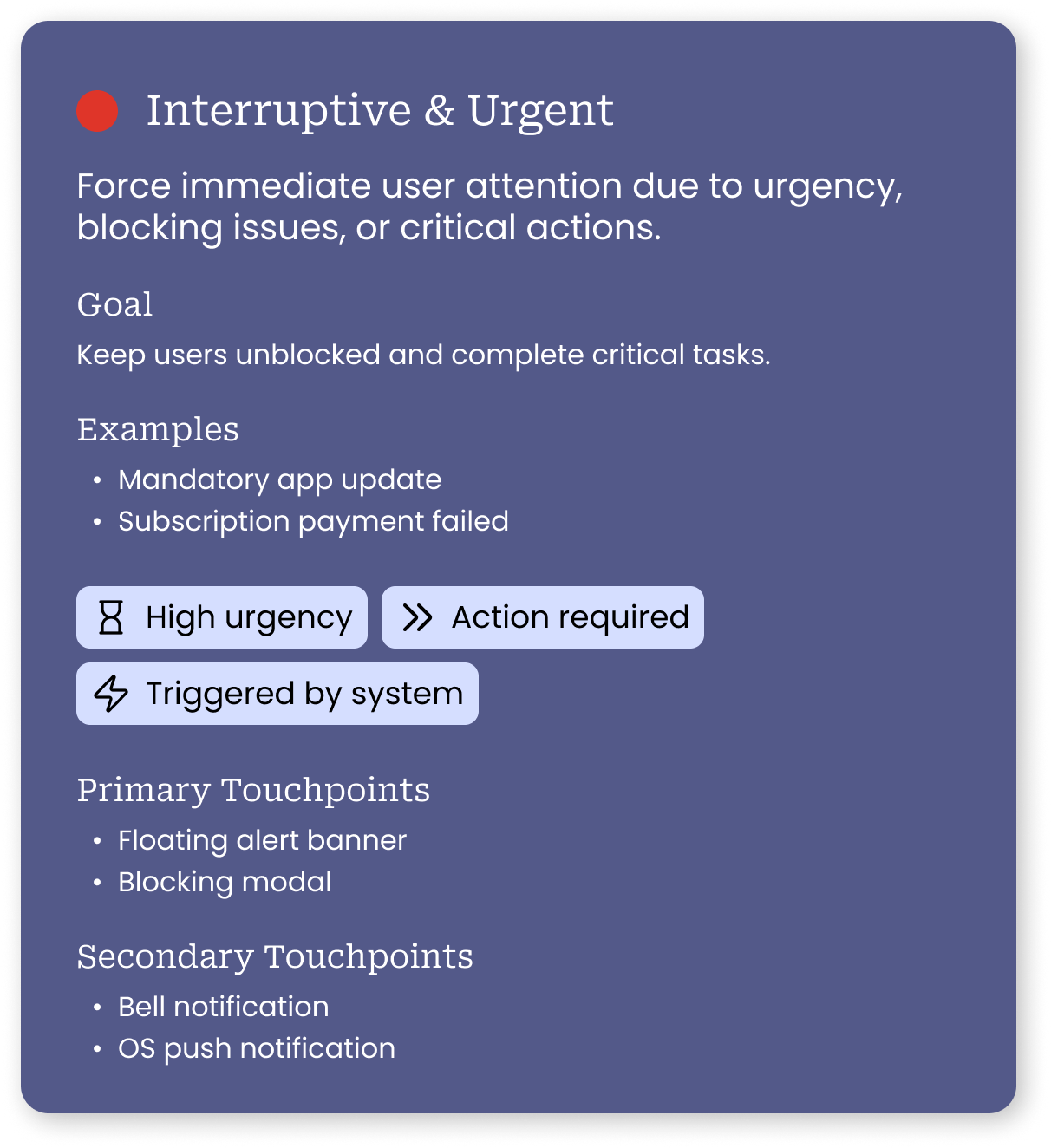
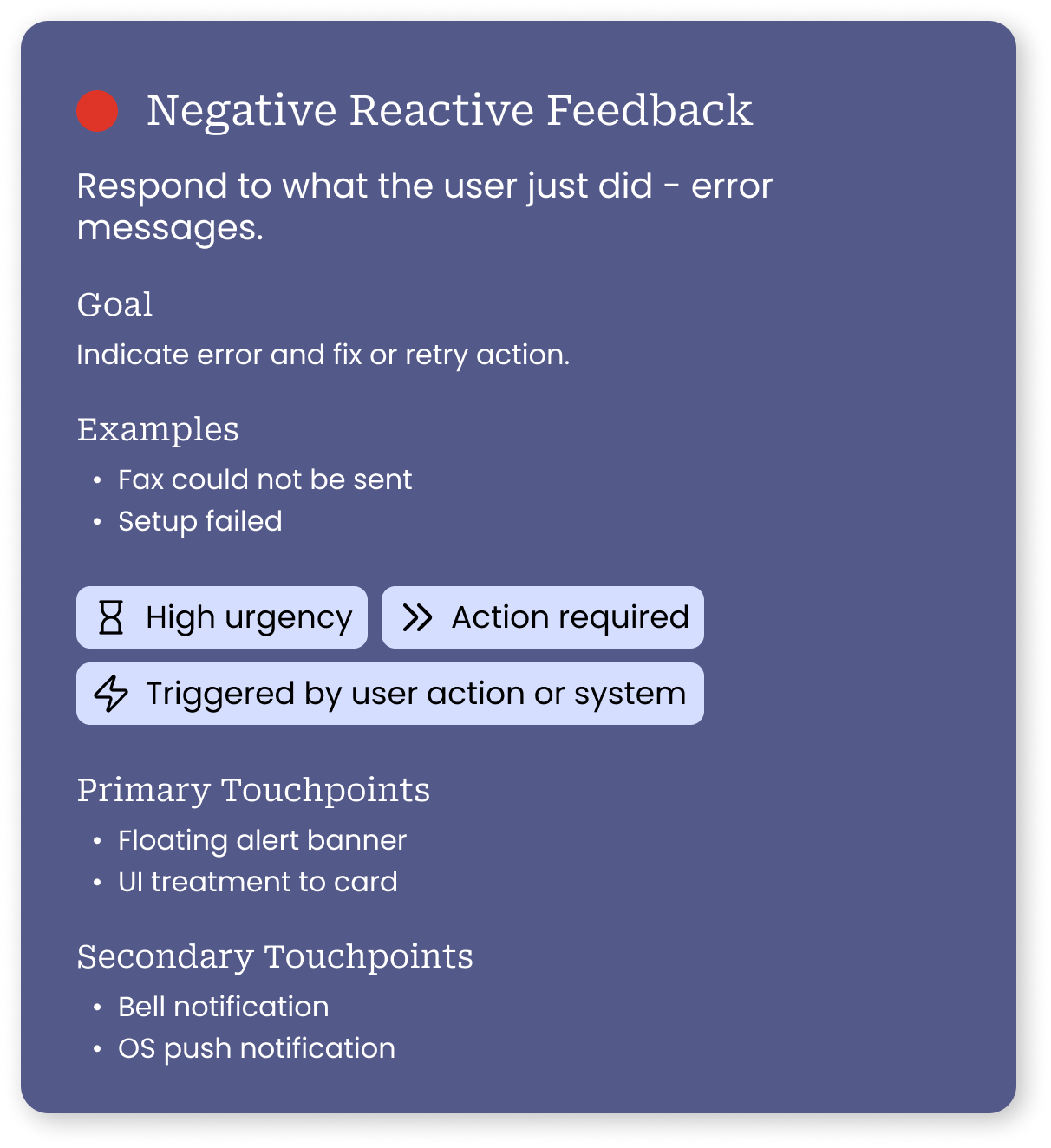
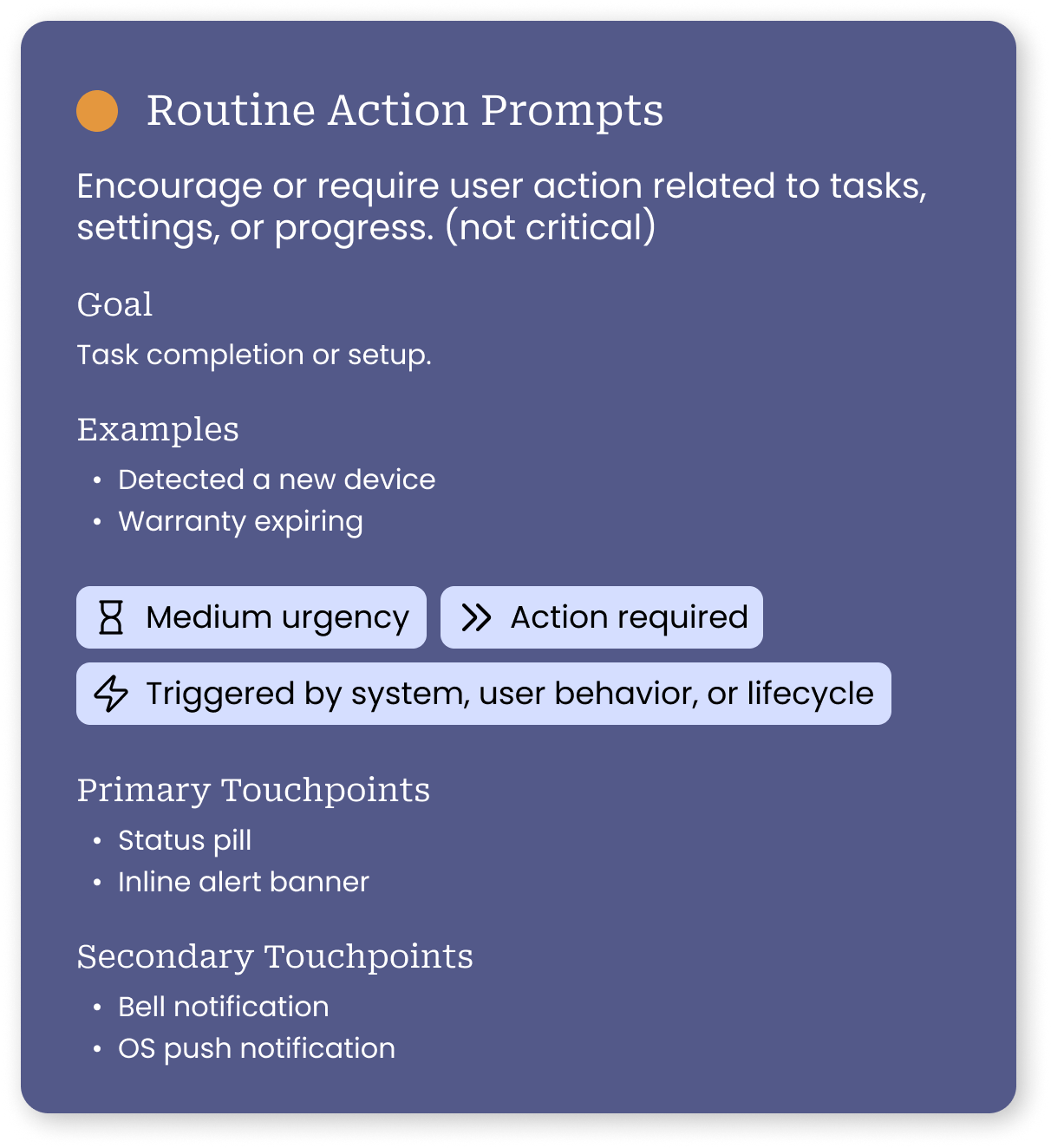
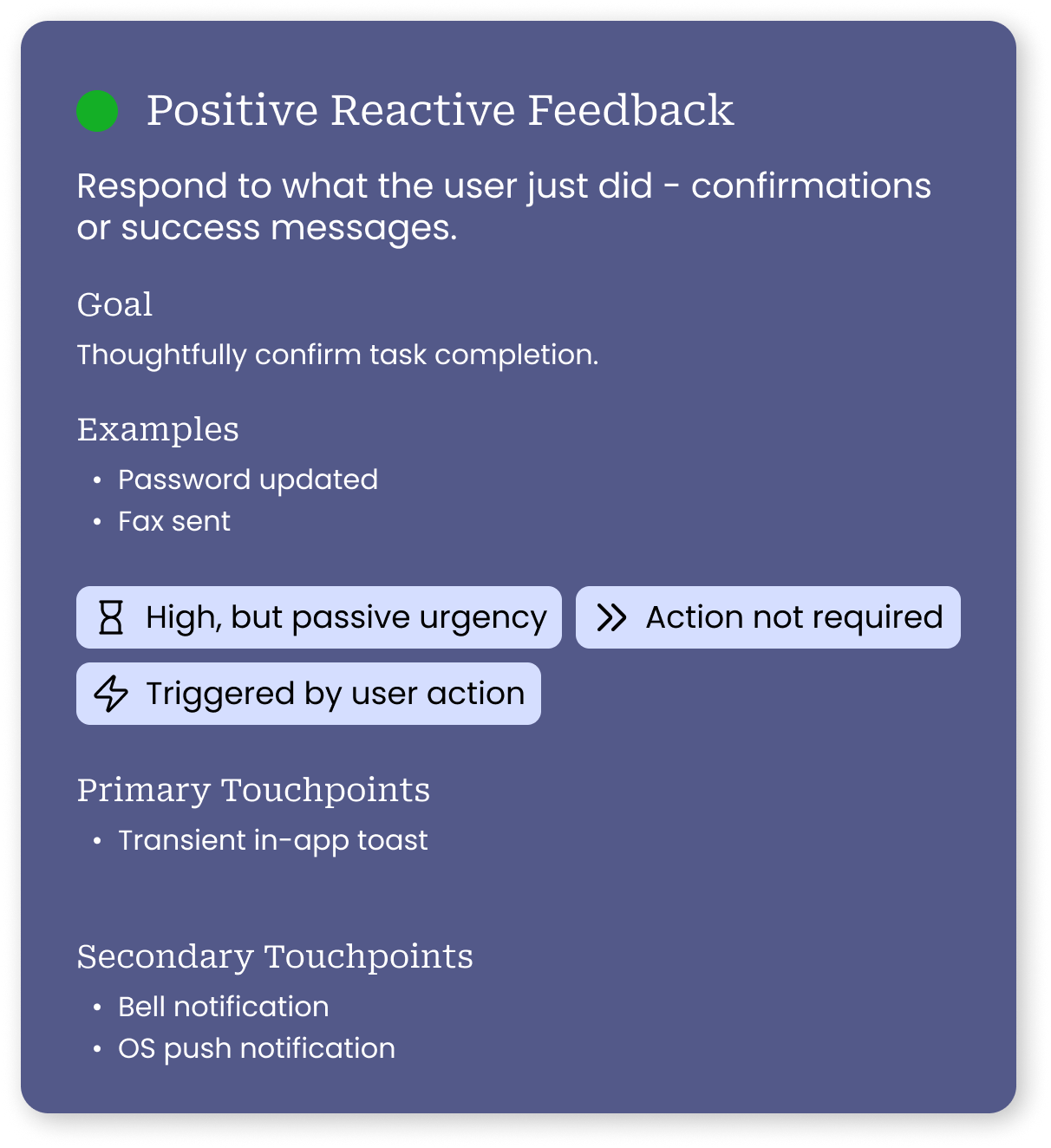
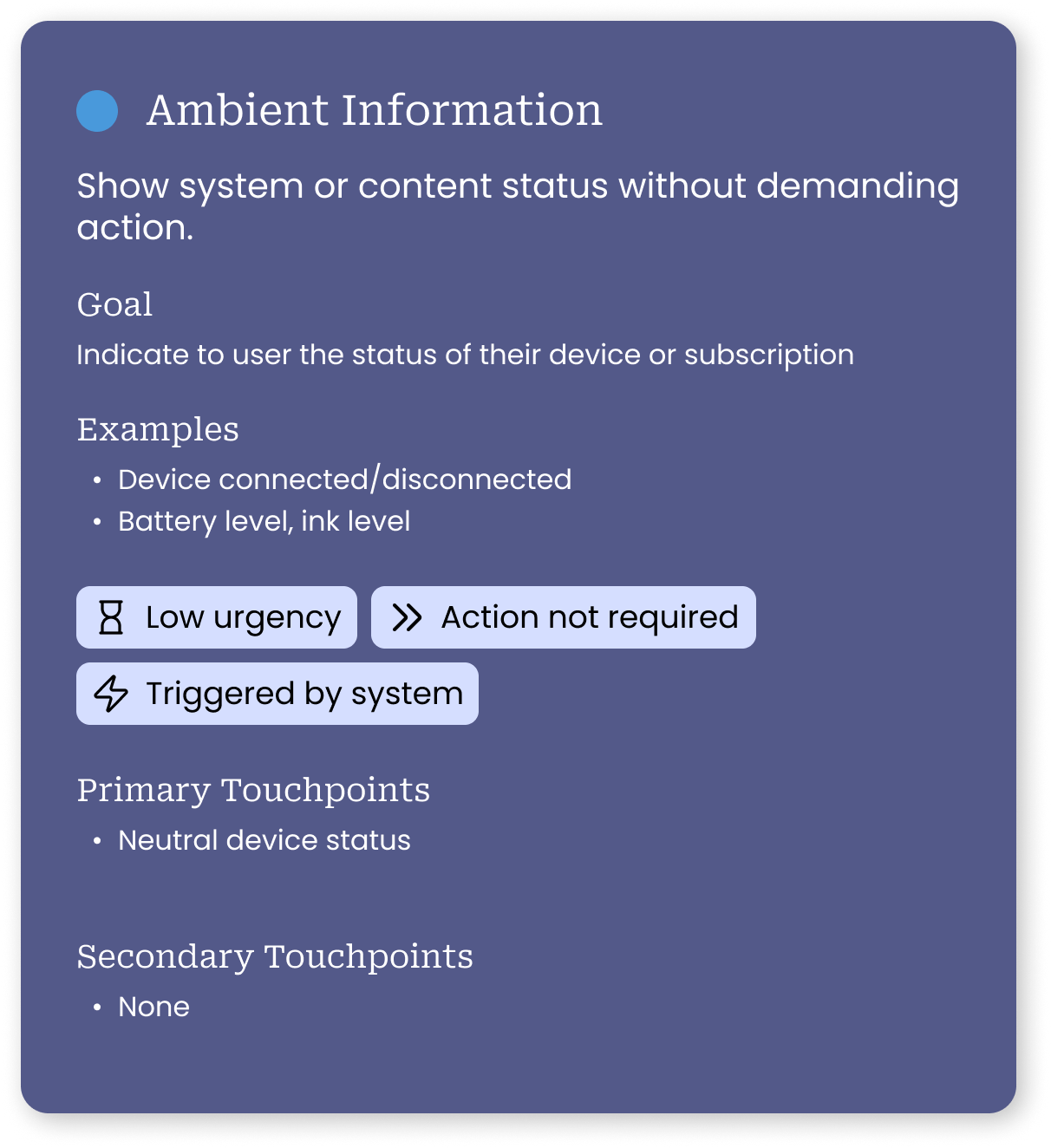
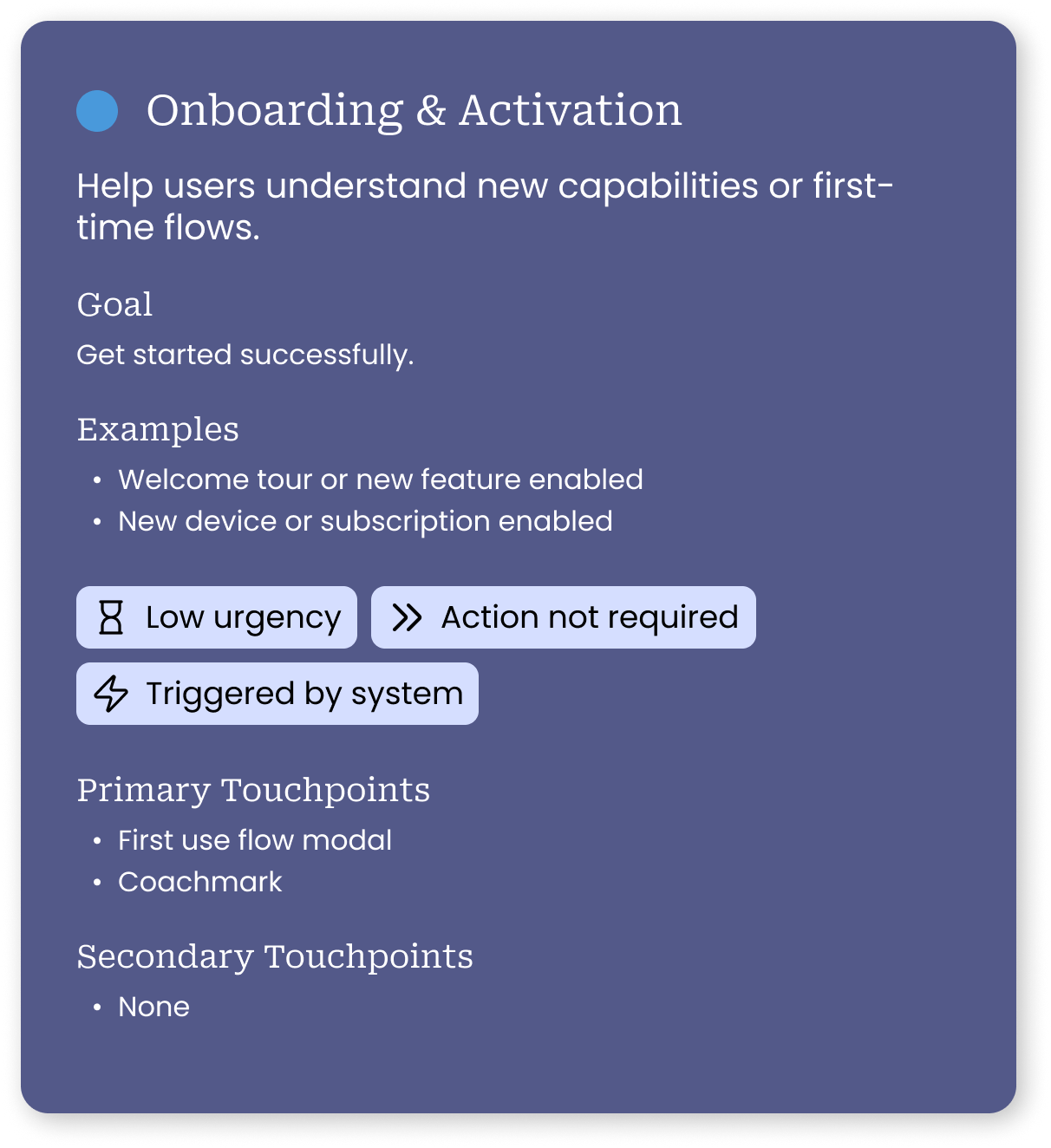
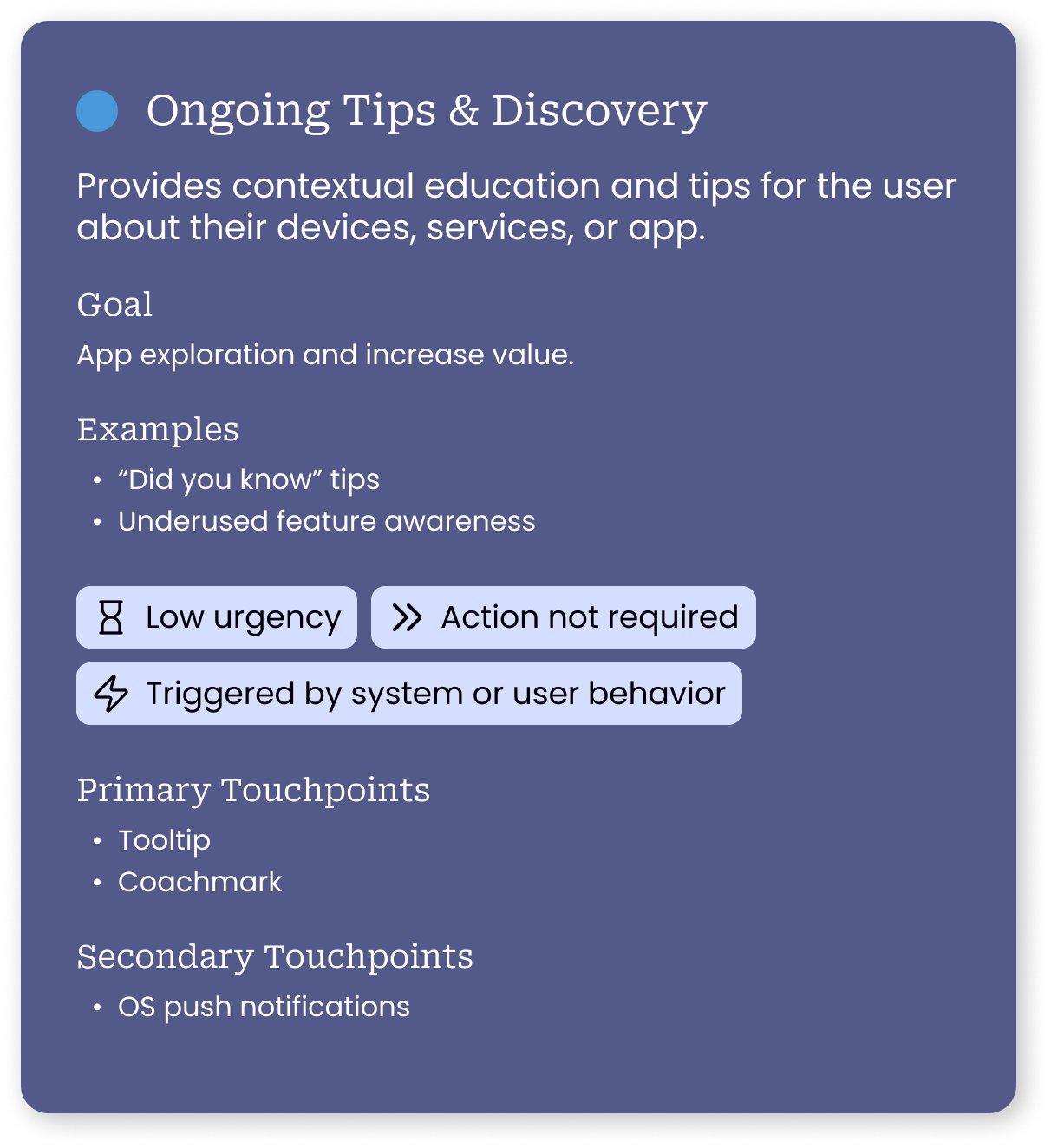
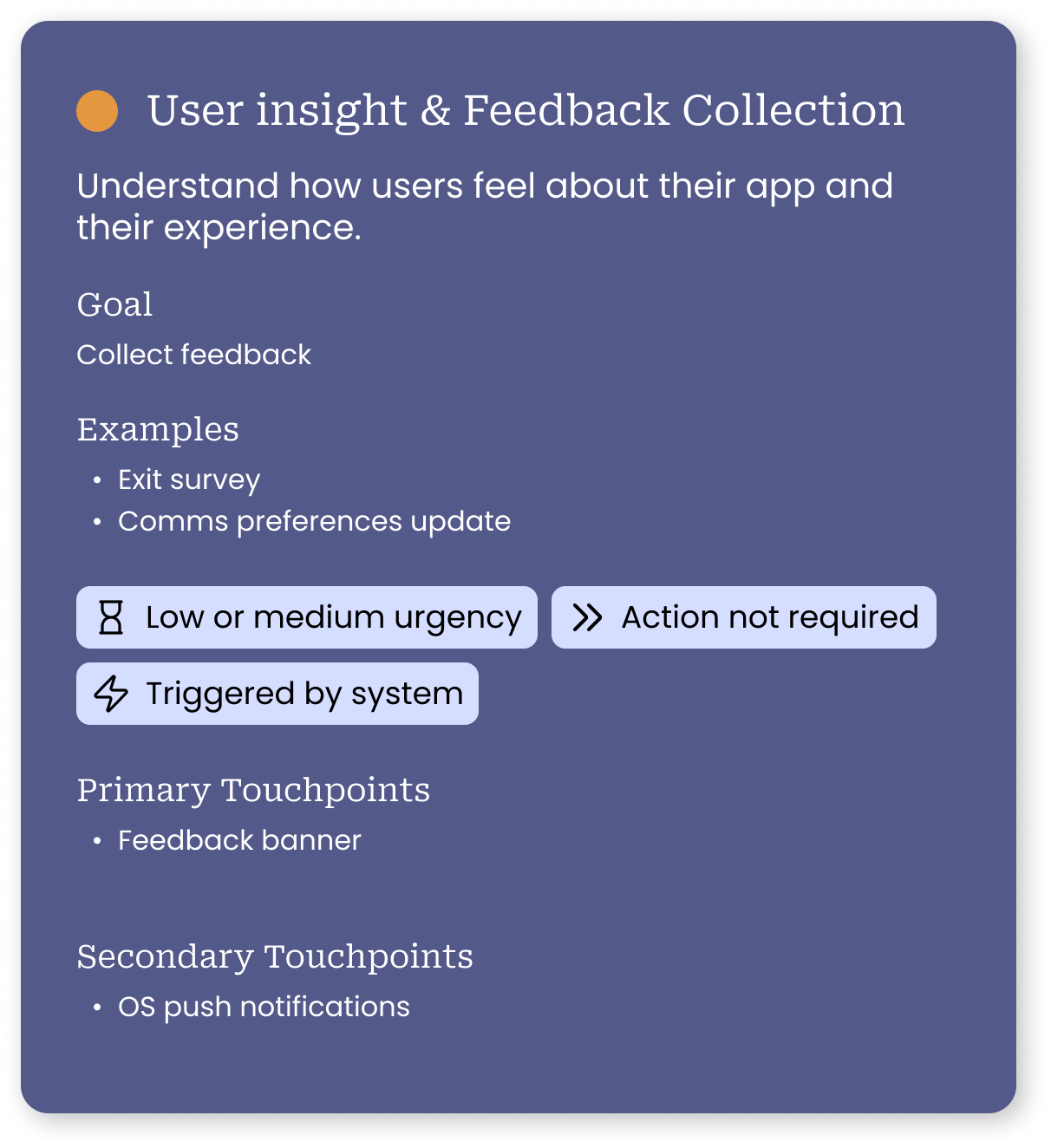
We established a clear set of communication categories that aligned teams around shared intent and priority, creating a common language for discussing user messaging. This helped teams make more consistent decisions about when to communicate and how urgent a message should be.
We also defined explicit rules for placement, timing, and tone across surfaces, ensuring messages behaved predictably regardless of where they appeared. Finally, we created clear boundaries between informational and monetized communication to protect user trust and prevent messaging from competing or overlapping.
Constraints
This work shipped within legacy HP Smart and myHP codebases, shared internal components, and micro-frontend dependencies, requiring pragmatic, scalable design decisions.
Impact
With the new communication system in place, partner teams gained clear guidance and a shared language for planning and delivering messages. This reduced ambiguity around where content should live and minimized overlap across communication surfaces.
Critically, messaging was decoupled from hard-coded implementations. Teams can now create and update content without engineering effort, allowing messages to be published or adjusted without waiting for app release cycles.
Together, this established a scalable foundation for future messaging. The system has been adopted by six partner teams and now informs communication planning across four product areas.
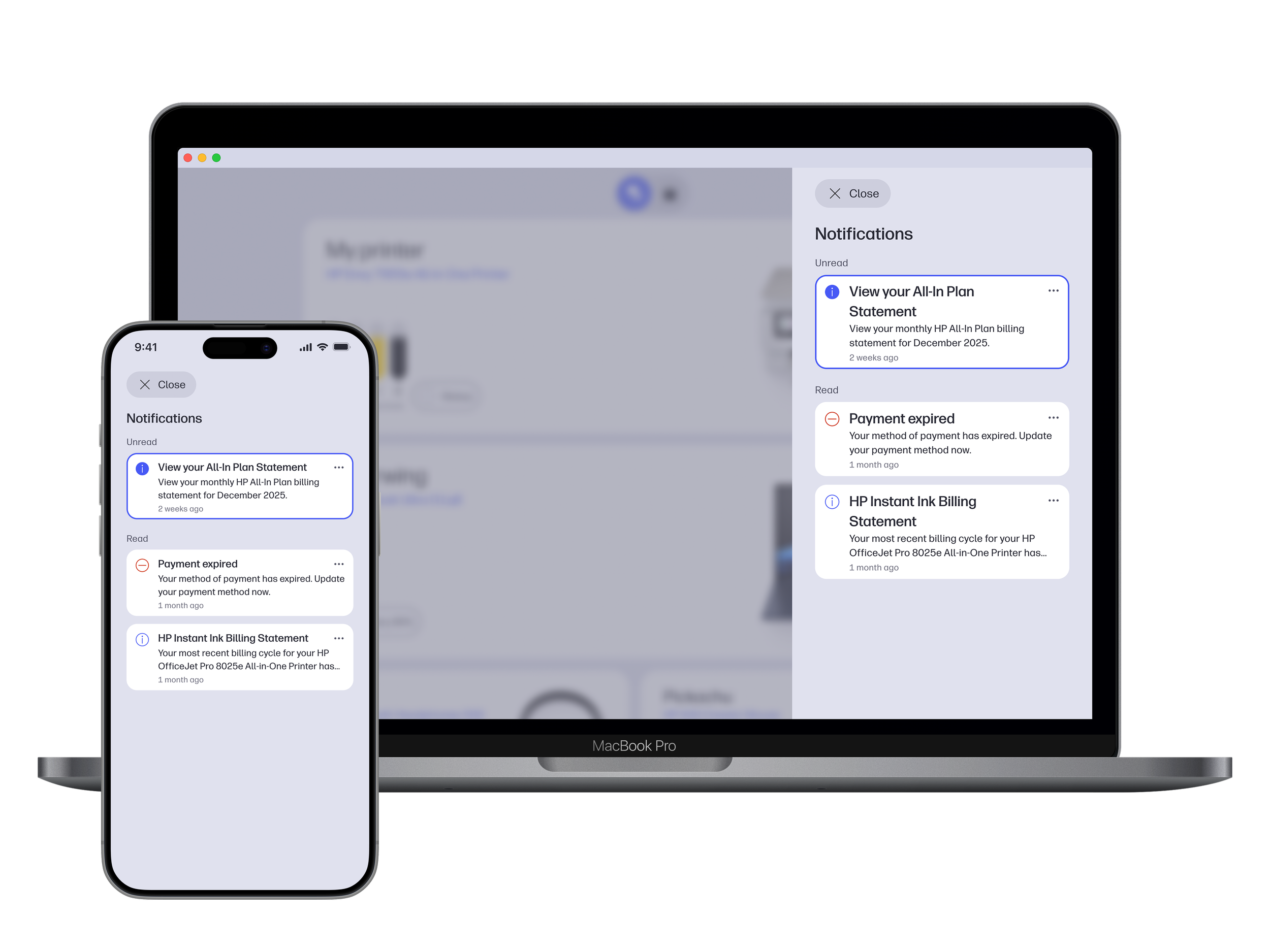
Bell Notification
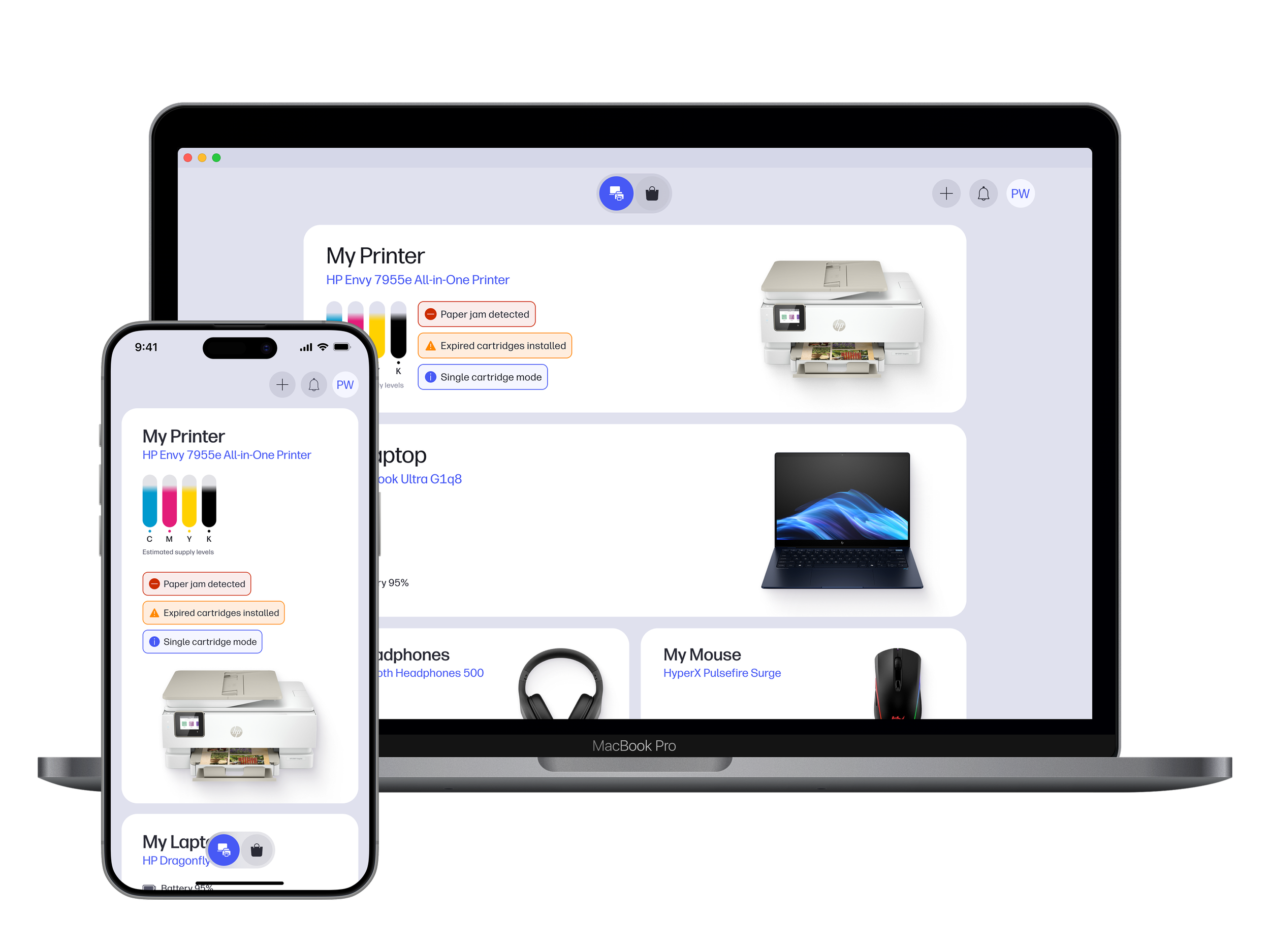
Status Pill
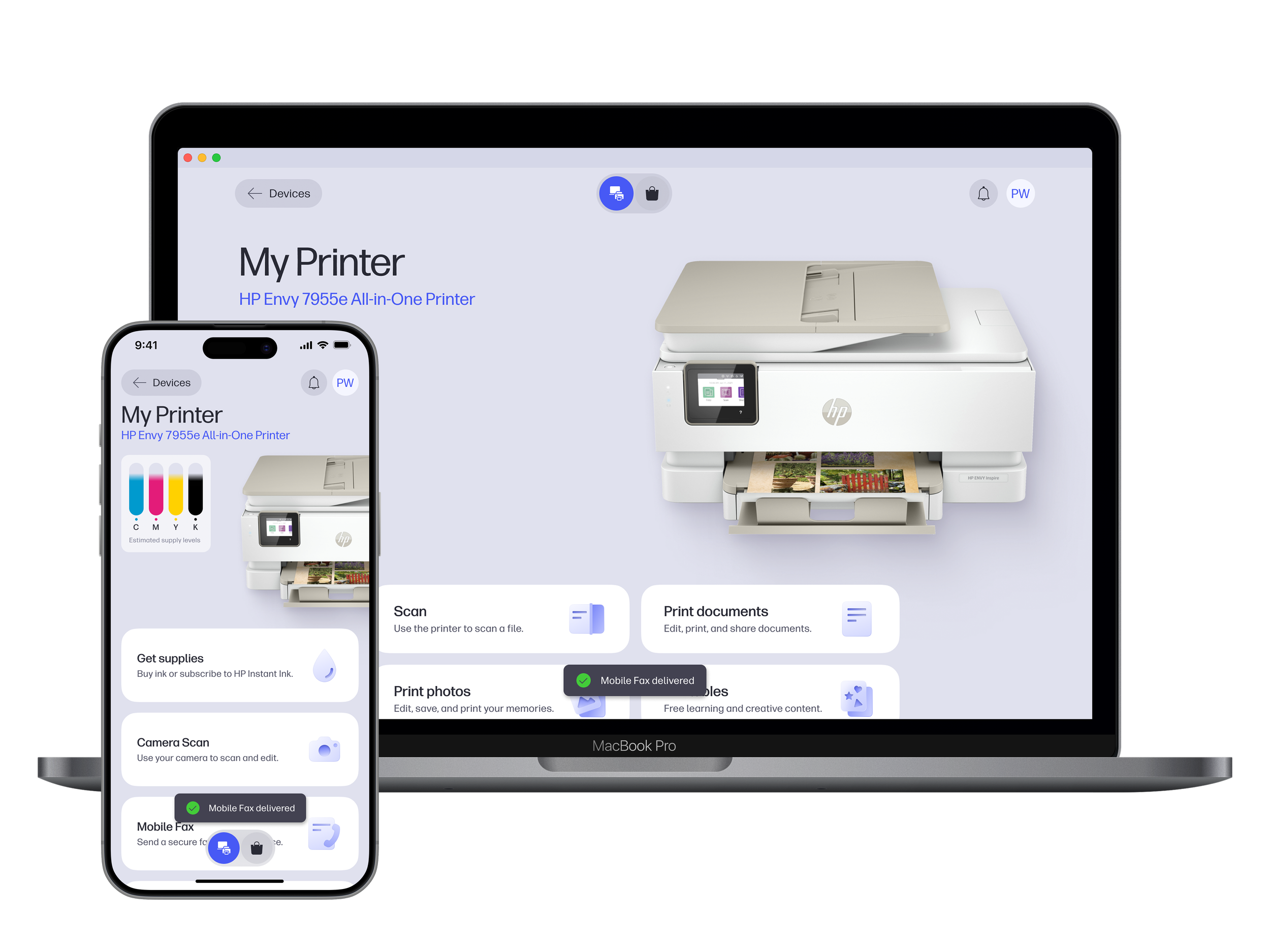
Transient In-App Toast
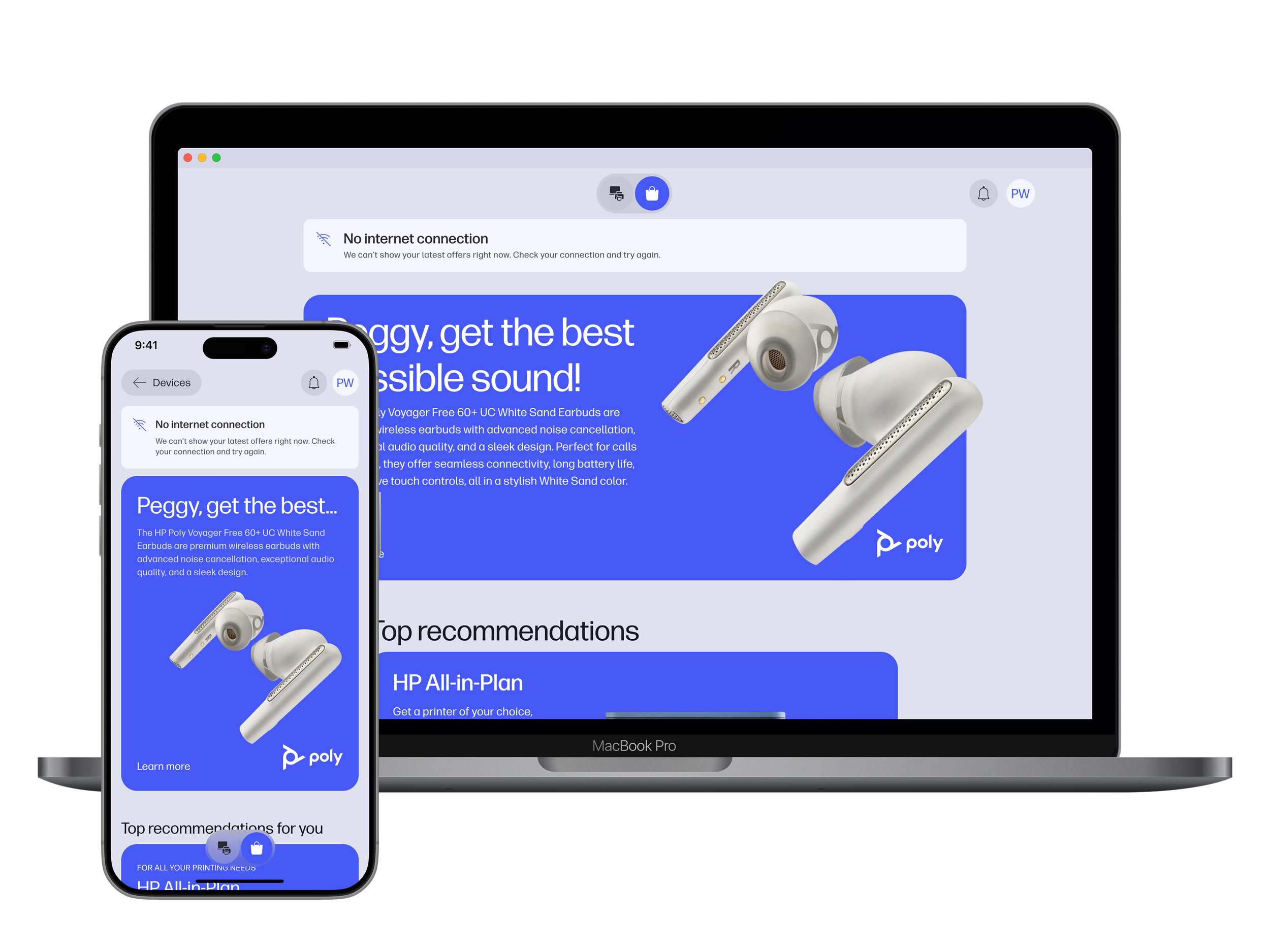
Inline Alert Banner